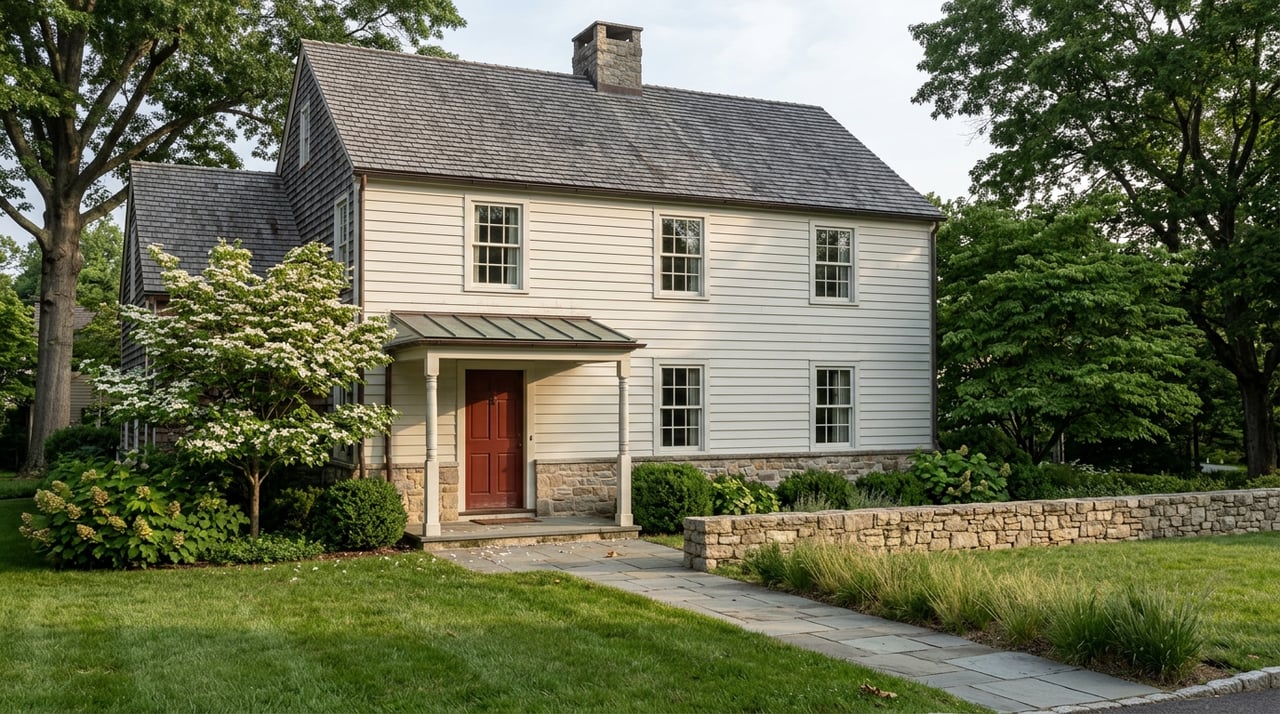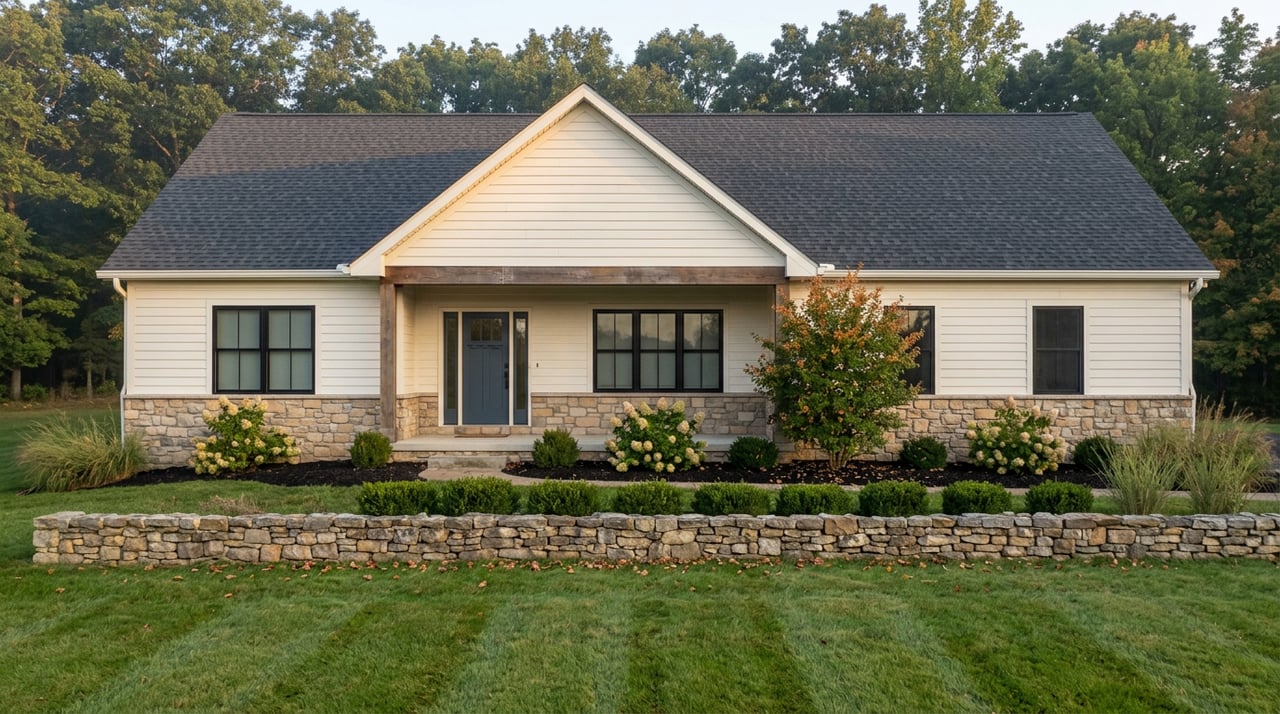
Pull up active listings in Centre Hall this month and you'll notice something odd. One property sits on a lot you could mow in twenty minutes. The next one over, same zip code, comes with three acres and a pole barn. Keep scrolling and you'll find a six-bedroom place on land that would take a tractor to maintain, priced well past a million and a half. What you won't find much of is anything in between. No comfortable half-acre. No quarter-acre with a fenced yard and a two-car garage sitting at a mid-range price.
That gap isn't a fluke of the current inventory. It's the shape of the market itself, and it comes down to a boundary most buyers never think to ask about: where the sewer line ends.
Where the Pipes Stop
Centre Hall Borough sits inside Potter Township, and the two share a joint utility called the Centre Hall-Potter Sewer Authority. Its service area is small and specific. According to the township's own sewer ordinance, CHPSA serves the borough itself plus a short list of named developments built right up against it: Penns Manor, Ashford Manor, and The Horizon at Brush Valley. A second, separate system serves Country Club Park, a 28-home development, and that's the extent of it. County housing records note there are no plans to expand that second system.
Inside that footprint, a builder can put homes on smaller lots because wastewater has somewhere to go. Step outside it, even by a few hundred feet, and every property is on its own septic system. That single fact changes everything else about what gets built.
What Happens Once You're Off the Grid
Potter Township's zoning ordinance doesn't leave the reasoning to guesswork. It creates a dedicated Water Quality Overlay District, and the ordinance itself explains why: much of the township sits on limestone, and those formations come with faults, fracture traces, and sinkholes that can move polluted water downward fast, without the filtering a septic system depends on. That's not an abstract concern in this part of Pennsylvania. In July 2026, a sinkhole opened up near Centre County Prison, assessed at as much as twenty feet deep, prompting an emergency response from county officials. Public radio station WPSU reported in August 2024 that College Township was still dealing with a sinkhole outside the Nittany Mall months after it first opened, while Patton Township worked through a separate sinkhole near a medical center construction site that worsened after Tropical Storm Debby that same August. None of those sit inside Centre Hall proper, but they're the same limestone bedrock Potter Township's own ordinance points to when it justifies larger lot requirements outside the sewer service area.
That's the second half of the mechanism. Where there's no public sewer, the township isn't just being cautious about septic performance. It's building in room for a private system to fail safely without contaminating a neighbor's well.
The Zoning Floor Nobody Mentions at the Open House
Here's where the acreage stops being a lifestyle choice and starts being a legal minimum. Potter Township's Agricultural District requires at least 3 acres per single-family lot. Its Open Space district requires at least 2. Neither number was picked to create country estates. It was picked to keep septic systems spaced out and to keep large tracts of farmland from getting chopped into suburban-sized parcels.
Layered on top of that is a separate, permanent constraint. The Centre County Agricultural Land Preservation Board has been purchasing conservation easements on farmland since 1989, and its current tally covers 59 preserved farm parcels across seven townships, totaling 8,785 acres. Land placed under one of these easements can't be subdivided for residential development, ever, regardless of what zoning allows later. Some of that preserved acreage sits in and around Potter Township, permanently removing it from the pool of land that could otherwise become smaller housing lots.
Put the sewer boundary, the karst-driven overlay district, and the farmland easements together and you get a market with almost no middle setting. You're either close enough to the borough to sit on public sewer, or you're on a lot that starts at 2 to 3 acres by zoning rule, sitting on land that in some cases will never be split further no matter how much a future owner might want to.
| Inside the CHPSA service area | Outside the CHPSA service area | |
|---|---|---|
| Wastewater | Public sewer | Private septic, karst-influenced site testing |
| Typical lot size | Smaller, borough-scale | 2 to 3 acre zoning minimum, often larger |
| Zoning driver | Borough and adjacent development districts | Agricultural or Open Space District |
| Named examples | Penns Manor, Ashford Manor, The Horizon at Brush Valley, Country Club Park | Surrounding Potter Township farmland and rural parcels |
| Future subdivision | Depends on borough zoning and available capacity | Often limited or blocked by ag zoning or a preservation easement |
What This Means When You're Comparing Listings
If you're cross-shopping Centre Hall against another Centre County neighborhood, the acreage on a listing sheet is telling you something specific here, not just conveying square footage. A 3-acre lot outside the borough might read as a premium feature on paper. In practice, it may simply be the zoning floor, the smallest lot the township would legally allow in that district. That doesn't make it a bad property. It does mean the acreage isn't necessarily a signal of luxury positioning the way it might be in a neighborhood without these constraints.
The reverse question matters just as much. If you're drawn to a smaller, in-town lot because you want less land to maintain, confirm it actually sits inside the CHPSA footprint before you assume public sewer. A property just outside the mapped service area can look identical from the curb and still mean an on-lot septic system, plus the site evaluation that comes with building or replacing one in karst terrain.
And if a rural parcel catches your eye because it looks like room to add a second dwelling or split off a buildable lot down the road, check two things before you plan around it: whether the property carries a preservation easement through the county's Ag Land Preservation Board, and what the underlying Potter Township zoning district actually allows. Either one can quietly close a door that looked open in the listing photos.
FAQ
Does a home outside the sewer boundary always cost more than one inside it? Not necessarily. Price still depends on the house itself, its condition, and current demand. What the boundary does predict fairly reliably is lot size and wastewater setup, which is often the bigger factor in a buyer's actual monthly costs and maintenance.
Could the Centre Hall-Potter Sewer Authority ever expand its service area? County housing records note there are currently no plans to expand the second system serving Country Club Park. Sewer expansions are capital-intensive and typically move slowly through municipal budgeting, so this is not something to plan a purchase around in the near term.
If I'm on septic in this area, should I be worried about karst specifically? It's a real factor to ask about during inspection and site evaluation, particularly for a system's age and prior performance. It's the same underlying geology behind the Water Quality Overlay District, and it's worth a direct conversation with your inspector rather than treating it as boilerplate paperwork.
If you're weighing a small borough lot against a few acres in Potter Township, the acreage number alone won't tell you which one actually fits your plans. Theresa Layton can walk through the specific parcel, where it sits relative to the sewer line, and what that means before you write an offer. Let's Connect.