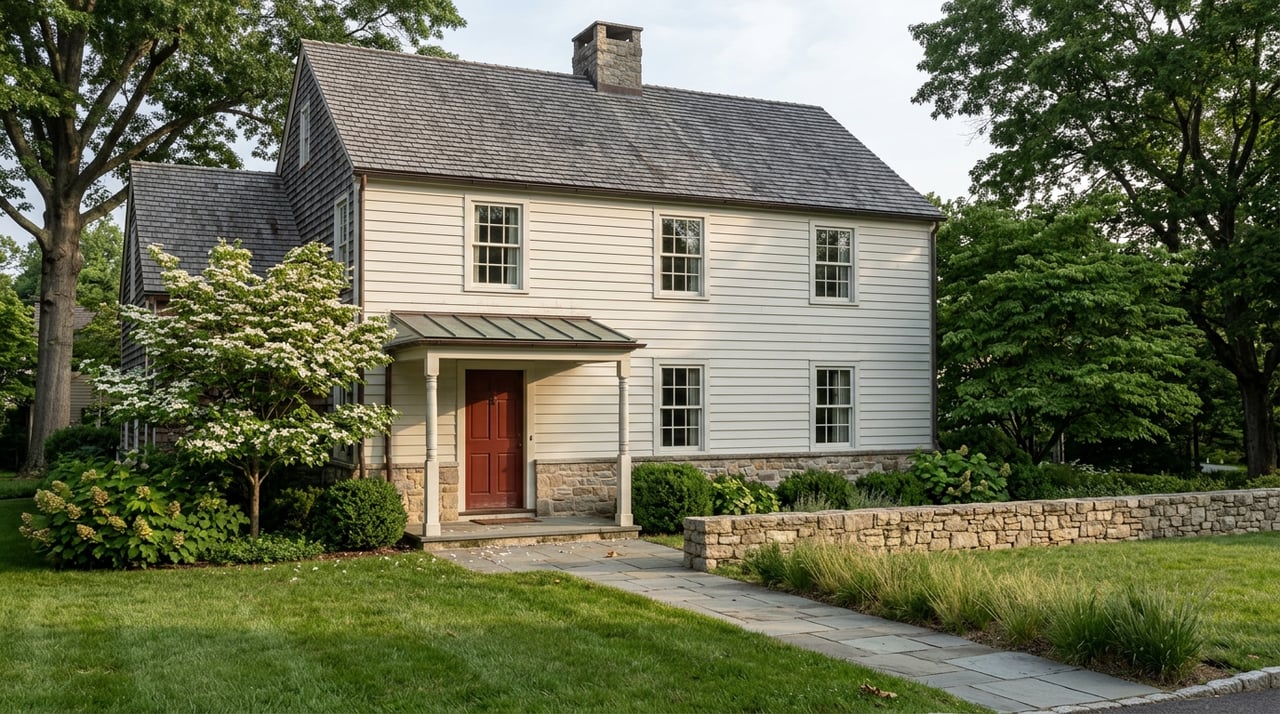
A buyer stood on the porch of a stone farmhouse two blocks off the Diamond last spring, looking at the small plaque near the door that marked the property as part of the Boalsburg Historic District. Her question was reasonable: did that plaque mean she needed a board's permission before she could replace the storm windows or repaint the trim.
It is the question almost every buyer asks when they fall for one of Boalsburg's older houses, and the answer surprises most of them. In Harris Township, the historic designation that covers Boalsburg does not work the way it does in many other Pennsylvania towns. It was built to stop one specific thing: tearing a historic building down. Everyday work on the house you actually live in is a different conversation entirely.
What the Plaque Usually Means Elsewhere
In towns like Bloomsburg, a local Historic Architectural Review Board reviews every exterior change inside the historic district, from a new coat of paint to a replacement window, and issues a certificate of appropriateness before a permit can move forward. That is the model most people picture when they hear "historic district." A board looks at your porch railing. A board looks at your shutters. A board can say no.
Harris Township runs its own list of boards and commissions on its township website: an Advisory Board, a Planning Commission, a Parks and Recreation Advisory Committee, a Shade Tree Commission, and a Zoning Hearing Board. There is no Historic Architectural Review Board on that list. Nobody in Harris Township is reviewing your paint chips.
What Harris Township's Ordinance Actually Regulates
The protection that does exist lives inside the township's zoning code, in a section called the Historic Resources Overlay District. The township's own published ordinance describes the goal in plain terms: preserve community character by protecting historic resources, encourage their continued use and adaptive reuse, and discourage demolition.
The overlay applies to three categories of property: anything inside the Boalsburg National Historic District, anything inside the separate Linden Hall National Historic District, and any property individually listed on the National Register of Historic Places even if it sits outside both districts.
Boalsburg's district covers 140 contributing buildings, most built between 1803 and 1870 in Georgian and Victorianized Georgian styles. Notable structures named in the district's own National Register documentation include the David Boal Tavern from 1803, Wolf's Inn dated to 1803 through 1832, and the Boalsburg Tavern from 1819. The Boal Mansion sits inside the district too, though it carries its own separate 1978 National Register listing, and the Columbus Chapel next to it, assembled in 1909 from a Spanish chapel shipped over to house a collection of Columbus family artifacts, is part of that same complex.
Here is where the ordinance's actual teeth show up. The substantive requirement in the code is triggered by demolition, not renovation. Before anyone can tear down a historically significant structure inside the overlay, the applicant has to publish a notice of intent to demolish in a local newspaper of general circulation and provide proof of that publication to the township. That is the mechanism. There is no parallel section requiring the same notice, or any board review at all, before someone replaces a roof, adds a mudroom, or swaps a window.
What This Means If You're Deciding Whether to Buy Here
If you are comparing a listing inside the historic district core near the Diamond against a house in Kaywood, Laurel Hills, or Oak Hall, the overlay is the one variable those other neighborhoods simply don't carry. A house in Kaywood or Laurel Hills sits outside the district boundary entirely, so this section of the zoning code never applies to it, for better or worse. A house inside the district gets the added weight of a demolition notice requirement if a future owner ever wanted to raze it, and, at least based on what the code itself lays out, not much beyond that for routine work.
That distinction changes the questions worth asking before you write an offer. Instead of asking whether you'll need approval to update a kitchen, the more useful questions are about the building's condition and its place inside the boundary line:
- Is this specific parcel inside the National Register boundary, or just near it? The district line runs through the village core and doesn't automatically extend to every nearby street.
- Has any prior owner tried to demolish, substantially move, or remove a major exterior feature from the structure? That's the trigger the ordinance is built around.
- What condition is the roof and foundation in? An old stone or brick structure that needs more than routine repair is a different financial conversation than a cosmetic update, regardless of what the zoning code does or doesn't require.
The Informal Layer Worth Knowing About
There is one more piece of the picture that doesn't show up in the zoning code at all. The Boalsburg Village Conservancy, a community organization established in 1973, played a central role in getting the district listed on the National Register in the first place. It has no regulatory power over your building permit, but it is a real, active piece of how the community thinks about the older housing stock in the village core. A buyer moving into one of the district's contributing buildings is moving into a place where longtime neighbors tend to care, informally and often warmly, about how those buildings are kept up. That's a social reality, not a legal one, and it's worth knowing the difference between the two before you assume either applies.
What to Actually Do Before You Write an Offer
The most useful step for a buyer serious about a Boalsburg historic district property is a direct call to Harris Township's zoning office before the inspection contingency deadline, not after. Ask specifically whether the parcel falls inside the Historic Resources Overlay District, and ask what the permit process looks like for the kind of work you're already planning, whether that's a new roof, a rear addition, or replacing original windows. The township's own permit and ordinance library is public and worth requesting directly rather than relying on a listing description.
FAQ
Does buying a home in the historic district affect my financing or insurance? The ordinance itself doesn't touch financing or insurance directly. Those conversations depend on the lender and insurer's own underwriting for an older structure, which is a separate process from anything Harris Township's zoning code requires.
Can I still replace windows or add a garage on a historic district home? Based on the ordinance's own language, routine permitted work like window replacement or an addition goes through the township's standard zoning and building permit process. The overlay's specific, named requirement is the demolition notice, not a design review for these kinds of projects.
Does the Linden Hall Historic District work the same way? Yes. The same Historic Resources Overlay District section names Linden Hall alongside Boalsburg, so the same demolition notice requirement applies there as well.
What if my house is individually listed on the National Register but not inside either district? The overlay's boundary language also picks up any property individually listed on the National Register of Historic Places, even outside the two named districts, so the same demolition provision would still apply.
A house with 200 years of history behind it asks for a different kind of attention than a new build in a subdivision down the road, but the actual legal weight of that history in Boalsburg is more specific, and more limited, than most buyers assume walking in. Knowing exactly where that line sits is the difference between passing on a good house for the wrong reason and buying it with a clear picture of what you're actually taking on.
If you're looking at a property inside Boalsburg's historic core, or trying to figure out whether a listing falls inside the boundary at all, Theresa Layton can help you sort out the zoning question before you're deep into a contract. Let's Connect and talk through what a specific address in Boalsburg actually means for your plans.